“Central Banks as Coordinating Agents”
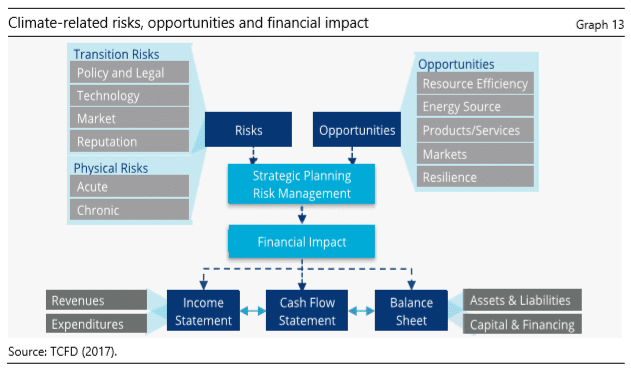
While Christine Lagarde has mentioned climate change as a potential consideration in the ECB’s upcoming policy review, Patrick Bolton of Columbia University and co-authors have taken the climate question a step further, arguing that “central banks have a role to play” in avoiding “green swan” events resulting from climate-related risks. In “The green swan: Central banking and financial stability in the age of climate change”, published Monday by the BIS, the authors warn that the complexity of the “physical, social and economic phenomenon” make risk analysis and mitigation particularly challenging. However, given the danger to financial and price stability, “climate change… falls under the remit of central banks” and they should not only work to improve their modeling strategies, but should also work to coordinate with “other players” including governments, the private sector, and “the international community”. Case in point, the authors highlight the growing role of “environmental, social and governance (ESG) standards in the financial sector”, with funds “that consider ESG in one form or another total[ing] $30.7 trillion of assets under management. “

If that weren’t enough of an indication of the outlook for greening of finance and the economy, the World Economic Forum’s Annual Meeting theme is “Stakeholders for a Cohesive and Sustainable World”. With sessions under the theme of “How to Save the Planet”, including “Financing the Net-Zero Economy” it appears the “investment and finance community” is getting ready to “mobilize before the planet reaches a tipping point”. The forum attendees also appear to be willing to walk the walk (somewhat) and are taking steps to green the conference itself through carbon offsets and local food, as covered in an article from Reuters.
“Muddled Picture of the Health of the Economy”
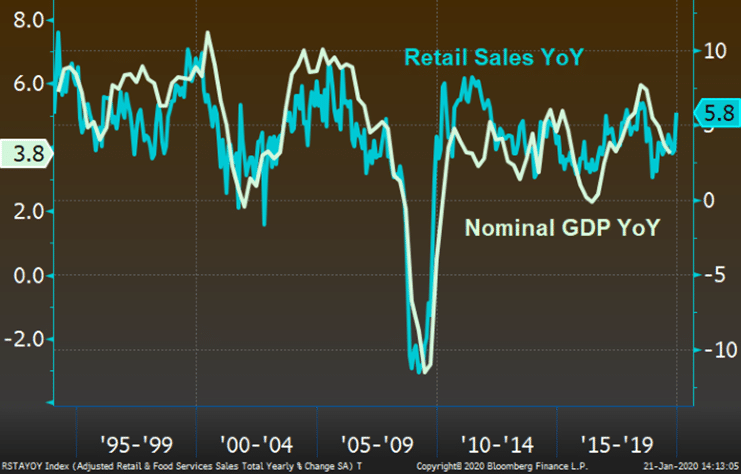
With much emphasis placed on the importance of the consumer in the US economy (see Jerome Powell and Jamie Dimon’s comments here), the latest Retail Sales data is welcome news. Not only did the advanced data meet projections, but the November data was also revised up. There is anecdotal evidence, however, that muddles the retail picture. In an article on Target’s earnings in the Wall Street Journal, Sarah Nassauer discussed the store chain’s “sluggish” sales, though some of it could be “explained away” due to the timing of Thanksgiving and fewer days for “shoppers to make impulse purchases”. Nassauer highlighted that other retailers had also reported sluggish sales, but with behemoths Walmart and Amazon yet to report their results, it’s still not clear if the problems are store specific or “evidence of a broader pullback by U.S. consumers”.