利益冲突,必有纷争 apparently means “Where interests collide, conflict is inevitable”. You would be forgiven for thinking we found it in a fortune cookie, but it was the result of an AI prompt. It’s apparently a “modern but idiomatic phrase commonly used in business, law, and policy discussions”. It’s trivially obvious that a divergence of material interests often results in conflict, but things like this often seem so much more profound when presented as a Chinese proverb.
I mention this because of the sudden resurgence in trade tensions last week. On October 9th, China announced new export controls on rare earths. The measures, effective December 1, extended China’s extraterritorial reach in a mirror image of the U.S. foreign-direct-product rule. Although it’s not obvious how China can enforce their new rule, the intent seems clear: to create systematic leverage over the U.S. economy going forward.
The following day, President Trump responded with a Truth Social post that threatened to impose an additional 100% tariff on Chinese goods, along with other restrictions. Stocks, PMs and Crypto were sharply lower on the news. Bonds are appreciably higher. Things looked a little concerning for a while, but it appears the “Sturm and Drang” was apparently theatre, again!: TACO.
Friends tell us that the source of the conflict was a misunderstanding: China mistakenly believed that the US had promised to freeze all export control actions. Following Trump’s threats, both sides were now keen to de-escalate, but without either looking weak, not an easy trick to pull off. The consensus among people who follow this question was that the worst-case scenario was vanishingly unlikely, because both economies remained too closely entwined to permit pain-free decoupling. However, there was another consensus: that neither side can see any viable path to a longer-term deal. And you know what they say in China – 利益冲突,必有纷争!
The better question is who has the winning cards, and as we have suggested before, our guess is, at least in the near term, that the answer is China. We say that because of the evidence that China has foreseen the coming trade conflict and done its best to prepare for it. But if this is right, our/investors’ main concern should be that the administration understands this and acts accordingly. While the evidence does suggest that the WH does see the weakness of their short-term position, things have become increasingly testy. This is common when core interests are at stake.
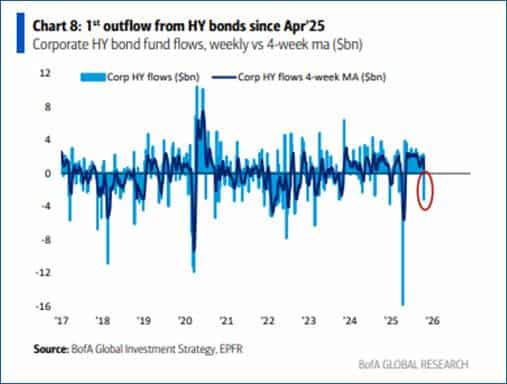
Another excellent example of how people can get upset when their core interests are threatened was prompted by the JP Morgan earnings call. During the call, Dimon spoke about recent problems in credit. “My antenna goes up when things like that happen. I probably shouldn’t say this, but when you see one cockroach, there’s probably more. And so, everyone should be forewarned at this point”. His comments seemed to irritate Marc Lipschultz, co-CEO of Blue Owl Capital, who might have taken exception to the use of the cockroach metaphor to describe his business. Dimon might have simply meant that Business Development Corporations have (like cockroaches) a very successful model which has weathered a range of unfriendly (business) environments for millions of years (like cockroaches). But that’s not how Marc Lipschultz took his comment.
Dimon, as the head of a major regulated bank, has an obvious interest in emphasizing the risks within private credit markets, where Business Development Companies and direct lenders have been gaining share at the expense of banks. By warning that “when you see one cockroach, there are probably more,” he frames private credit as a source of hidden systemic risk—implicitly making the case that regulators and creditors should closely scrutinize nonbank lenders, which could slow their growth, but worse, potentially threatening their funding. Lipschultz, co-CEO of Blue Owl, a leading private credit firm, responded sharply that “banks might want to look at their own books for any ‘cockroaches’”. We see evidence of cracks in credit or “cockroaches” too, but then we aren’t potential buyers of distressed credit businesses. Perhaps the takeaway is that people get so much tetchier when business conditions turn tough.