“Expectations about the future are shaky”
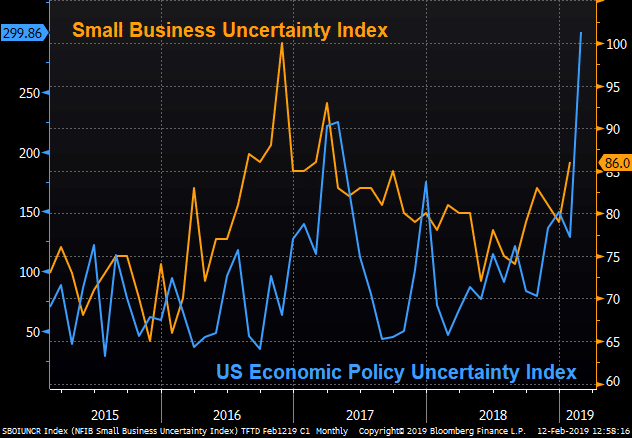
The NFIB released its Small Business Optimism Index today and the data was markedly mixed. While the headlines from the press have highlighted the relative weakness, the data is not all bad. It is true that the headline reading was the lowest of Trump’s presidency, and both sales growth and business expectations weakened markedly. But this softening came while the Uncertainty Index jumped seven points, to the fifth highest reading on record. According to Juanity Duggan of the NFIB, this is not coincidence, “Business operations are still very strong… and while they are continuing to create jobs and increase compensation at a frenetic pace, the political climate is affecting how they view the future”. NFIB Economist Bill Dunkelberg more directly blamed Washington, saying the government shutdown and political gridlock have elevated “the level of uncertainty, which is damaging economic activity”.
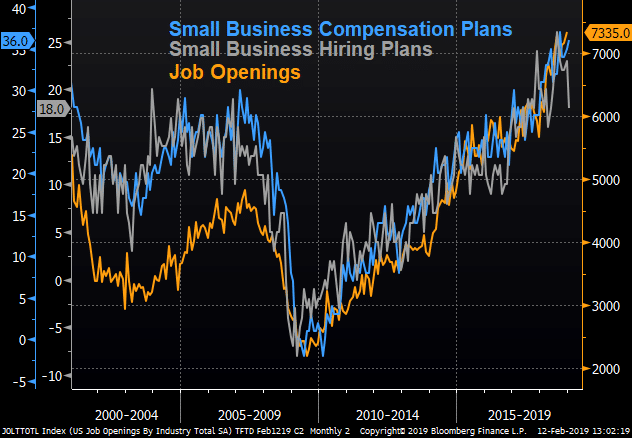
Despite this uncertainty, “Hiring, hiring plans, and job openings remained strong”. Compensation plans hit the second highest level on record, lagging only the reading from September of last year, and it remains difficult for employers to find qualified workers. These readings affirmed recent “outsized job numbers” and are inline with the JOLTS data released today, which showed 7.3 million job openings, the highest in the history of the data series. However, in the face of labor tightness, the NFIB notes that “In no industry group did the percent raising prices exceed the percent raising worker compensation, good news for inflation watchers”. While combining anecdotes doesn’t create evidence, there is anecdotal reason to believe pressures are rising. Amazon’s Whole Foods is raising prices due to supplier cost push and Walmart is upping wages for truck drivers. Tomorrow’s CPI will be one to watch.
“Allowing inflation to rise temporarily”
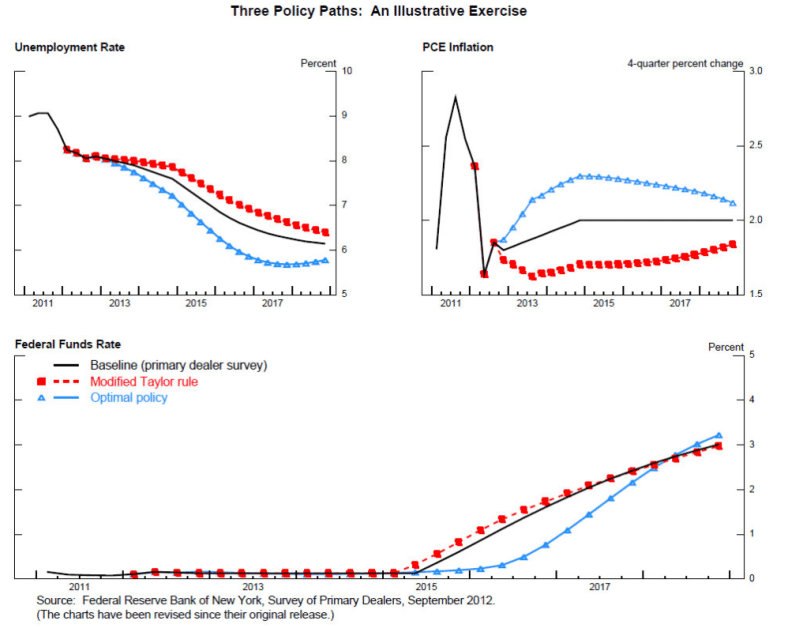
Beyond the “good news for inflation watchers” it turns out that, inflation may not even be something to fret over! According to 2016 research from Vasco Curdia, whose recent research we profiled last week, “allowing inflation to temporarily rise above the Fed’s 2% target” “would eliminate the remaining economic slack… substatntially faster than if inflation remained below its target”. In “Is There a Case for Inflation Overshooting?” Curdia describes how a different approach to rate hikes, called “optimal control” would be beneficial and “speed up the ongoing economic recovery”. This isn’t a new idea, and Fed watchers will recognize it from past talks given by Janet Yellen, including her 2012 speech on Central Bank communication.
A more complex analysis of the Fed’s path is done by Adam Ozimek and Michael Ferlez of Moody’s in “The Fed’s Mistake”. Their analysis makes the distinction that the Fed made an ex post mistake, “that subsequent data have revealed that the Fed raised rates too fast” (emphasis our own) based on inaccurate estimates. While on the technical side, Ozimek and Ferlez do an excellent job synthesizing how Fed estimates, forecasts, and actions interplay, and the paper is a worthwhile read for Dot Watchers and the simply-curious alike.