“Canary in a coal mine” is a very popular metaphor. It’s popular for a reason: who doesn’t need early warning of an impending disaster? Of course, everyone knows where the metaphor comes from. John Scott Haldane was a Scottish physiologist, physician and academic who made an astonishing contribution in several fields, and it was his idea to use small animals (mice or birds) as an early warning of potential danger from noxious gases in mines. The practice saved untold numbers of British miners from carbon monoxide-related asphyxiation from its introduction in the late 1890s until it was replaced in British pits in 1986 by electronic gas detectors. I’m sure the canaries breathed a collective sigh of relief.

The idea worked because small animals are more sensitive than miners (due to their faster metabolisms) to the effects of noxious gas. Naturally, there are lots of analogies in finance and economics. Just this week, Nela Richardson, the Chief Economist of ADP, suggested that small business is the canary for the broader economy, and I think most observers (including MI2) agree with her. She did so in the context of the ADP’s monthly private sector employment report last Wednesday, which showed a net loss of 32k jobs compared to an upwardly revised gain of 47k jobs in October. However, the report suggested that small business employment fell by 120k. Given that small businesses employ about half of US workers, you can see why Nela thinks it might be indicative of further weakness. Perhaps this tells us that the Fed will cut rates a further 25bps in December. After all, small banks and their small business clients have borne the brunt of Fed attempts to buttress what’s left of its inflation-fighting credibility.
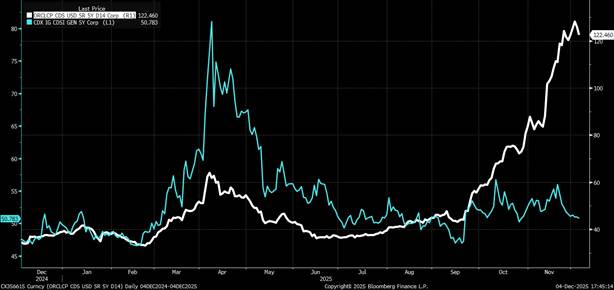
The canary metaphor is also popular in politics. Readers will be aware of our perpetual struggle with cynicism, but we can’t shake the thought that it is the shifting political sands which are the underlying force driving policy easing. We have lately been interested in the Oracle canary. Back in November, BofA’s Hartnett noted that Oracle CDS spreads had suffered a little from its Data Centre exposures. While it does look like it might be stabilising now, it is doing so from worse levels than those which caught Hartnett’s eye. Not that we harbour any serious fears for Oracle’s future (don’t ask us about OpenAI), but it does make us think that the cost of money for more marginal borrowers might still be heading higher.
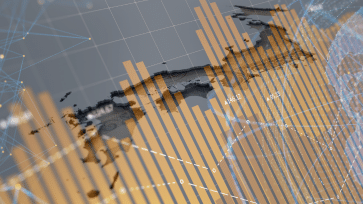
We live in exceptionally interesting times, so perhaps we should not be surprised that canaries in proximity to EU fiscal policy are also dropping like flies. But if forced to pick the most ominous canary, we might draw readers’ attention to JGB yields. Of course, this tweet overstates how high yields are, but long yields in Japan are definitely telling us something.

P.S. Is it Hassett?
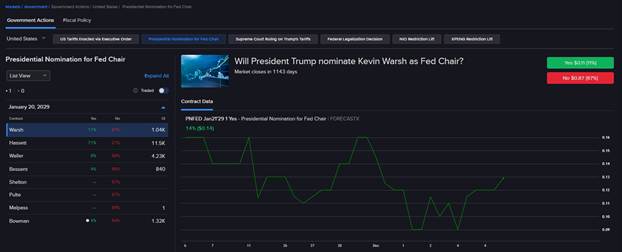
Of course, now that everyone knows it’s Hassett, the stage is set for Trump to change his mind yet again. Our friends in D.C. tell us it ain’t over until POTUS places his Mickey D’s order. We’re told that folks should keep an eye on both Trump and Bessent, and refrain from publicly backing Kevin H. The decision has now slipped into the New Year—and it’s never good to be the frontrunner in races like this. With Hassett trading as the 71% favorite, it might be worth sliding a little pin money toward Warsh and Waller.