“Debating How to Best Define Their Medium-Term Objective”
Last week, we mentioned the ECB’s upcoming strategic review, highlighting the potential for a green lean as the ECB considers taking climate concerns into their calculations. This week, the upcoming review is back in the news following Christine Lagarde’s first “Monetary Dialogue” with the European Parliament. In her speech, she listed “demographics, disruptive technology and climate change” among the challenges that have emerged since the ECB’s last strategy review. While Lagarde was hesitant to offer any insight on “the precise scope, direction and timelines” of the review, she assured MEPs that the ECB’s accommodative policy stance “remains in place” and “will continue to support the economy”.
At the same time the ECB is preparing to launch its strategy review, the Fed is concluding their own. Though there is no firm deadline, the review that was announced last November is set to report its findings “to the public during the first half of 2020.” But there are already some hints of what they are considering. According to an article from the Financial Times, policymakers are contemplating a “make-up strategy” that would allow inflation to run above the two percent target. Such policies are not new, as we’ve discussed before. However, policymakers are aware that such policies require some finesse. Fretting over consumer and investor inflation expectations, Fed members such as Rosengren and Brainard emphasized that such a make-up rule would need to be “flexible” and communicated clearly.
“QE Has Created an Addiction to More QE”
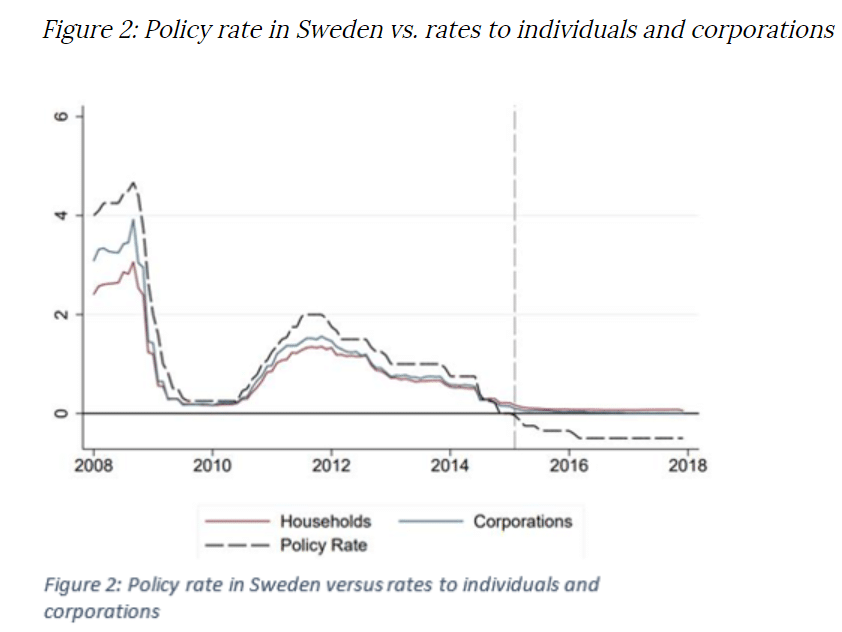
While central bankers set about their navel gazing, Epsilon Theory is, as they have before, explaining how the central bank prescription of negative rates “is producing precisely the opposite of the desired result”. In “A Cycle of Addiction” Peter Cecchini draws on research from Norges Bank and comments from former BoJ Governor Masaaki Shirakawa, to explain how negative rates “lock the central banks and the economies they serve into a cycle of addiction”. Additionally, beyond the damage done to bank profitability, negative rates “force investors… like pension funds… to take unwarranted duration and credit risk”, as we discussed here. Cecchini admits fiscal policy is still a “lever” left to pull and concludes that “aggressive rates policy and negative rates… have sprung into large dogmatic trees, which should soon be cut down”. But where to find such a lumber jack? According to Saxo Bank’s Outrageous Predictions, Christine Lagarde could execute a “volte-face” and hike rates in 2020! We won’t hold our breath.
“Slowdown in Business Has Us Revising Our… Capital Spend”
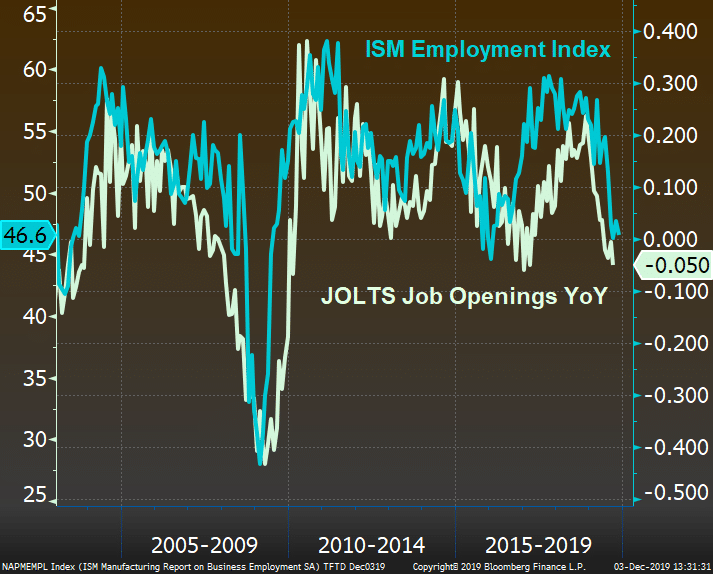
The above quote is from the latest ISM Manufacturing report, where the PMI missed expectations and came in at a contractionary 48.1. The weakness was due to decreases across a number of index components, but among the big surprises were employment and new orders, with both contracting faster than the previous month. While we have said before that the plural of anecdote isn’t data, recent news from the shale patch on job losses corroborates what the ISM data is saying and could be an omen of pain to come in the job market.