“NIRP Makes Many of Us Viscerally Uncomfortable”
Less than a year ago, Andrew Lilley and Kenneth Rogoff were discussing the “negative interest rate world that is perhaps inevitable”. Today, there’s not only growing evidence that negative rates aren’t all they were made out to be, but that doubt appears to be taking hold.
In a recent article for Bloomberg, John Authers walks through some the recent data that show “that NIRP could be deadly”. Starting with a paper on NIRP’s effects on yield curves, Authers finds evidence that “negative rates force the curve lower for years into the future”, with Japan offering a perfect example. But beyond just the effects on the curve, NIRP creates an environment where “critical market signals no longer work”, and where the attendant transaction costs lead to a cascade of effects which eventually “suppress economic activity at the margin”. But it is not just the unintended consequences that are a problem. “In terms of the core macroeconomic goals that central banks presumably had in mind when they cut rates below zero, the record is terrible”. Though Authers admits that “we can never know the counterfactuals”, he walks through currency, inflation and GDP to conclude that “there is simply no evidence yet of NIRP having a positive effect at all”. Authers’s bottom line is that “Once rates go negative, it grows harder and harder for financial markets, and hence modern economies, to operate”.

The Reserve Bank of Australia is also dubious about negative rates. In his speech on “Unconventional Monetary Policy: Some Lessons From Overseas”, Governor Philip Lowe discusses the implementation of negative rates as the zero lower bound did not turn out “to be the constraint that it was once thought to be”. However, in terms of effectiveness, Lowe warns that “having examined the international evidence, it is not clear that the experience with negative interest rates has been a success” and emphasizes the “other effects”, including “strains in parts of the banking system”, “problems for pension funds” (more), less household spending, and “damage[d] confidence in the general economic outlook”. Going even further, Lowe addresses the idea of a “reversal interest rate”, a concept we discussed here, and assures listeners that the RBA “take[s] the possibility of a reversal rate seriously”.

“These views… don’t reflect the consensus of the profession”
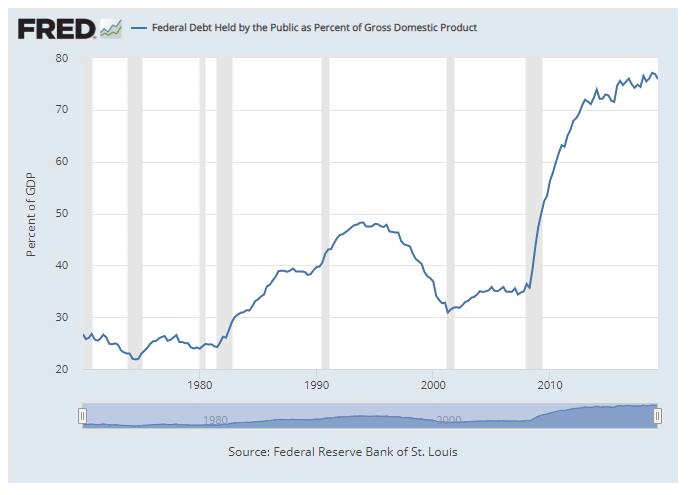
MMT was once again in headlines yesterday, with CNBC publishing the lengthily titled “Fed economists warn of ‘economic ruin’ if Modern Monetary Theory policies are ever adopted”. The title is a bit of a reach as the St. Louis Fed article, “Making Sense of the National Debt” never explicitly mentions MMT. Instead, the Fed article warns that governments with high levels of “unsustainable debt” who turn to printing money as a solution often end “in economic ruin”. But the CNBC article does find a silver lining, arguing that “deficit spending can be used to fund improvements… without causing long-term damage”. Perhaps this will be on Christine Lagarde’s mind as she considers how the ECB can “address sustainability” in its upcoming policy review.